Trending

Two people can pay the same money for the same show and have completely different evenings. One is craning around a pillar; the other is watching an actor's face crack open on a line you can feel from the third row of the first tier. The difference is usually the seat. It is worth ten minutes of thought before you click buy, because seating is the one part of a night at the theater you can genuinely control.
What follows is a working map of how theaters are laid out, what actually blocks a view, and which seats tend to serve which kind of performance. No rules are absolute — every house is a little different, and a director can stage a show against the grain of its own building — but these are the patterns that hold up night after night.
Most proscenium houses sell seats in the same broad zones, and each zone has a personality.
Closest to the stage, and the closest to faces, breath, and small gestures. You hear unamplified voices directly rather than through a speaker. The trade-offs: you are at eye level with the back of the head in front of you, and the rear of the orchestra, under the tier above, can feel low and boxed in, with sound arriving slightly muffled.
Raised, closer to the action than its distance suggests, and angled down toward the stage. This is the zone many regulars default to, and for good reason: you get faces and full stage pictures at the same time. Watch for the front row of any tier, where a safety rail or a low parapet can slice through the bottom of the stage if the seats are not well stepped.
Cheapest, steepest, and often better than its reputation. A steep rake means you look over heads rather than through them, and the acoustics up there are frequently clear. What you lose is detail: expressions become posture, and a whispered scene turns into guesswork.
Side-on views are a specialist taste. You see into the wings, the pit, the lighting rig — the machinery of the evening. On the other hand, anything staged deep upstage compresses, and actors playing to the center may show you their profiles for long stretches.
"Restricted view" on a seating chart is honest but vague. It can mean a thin handrail you forget within five minutes, or a pillar that removes a third of the stage. Ask what the restriction is, not whether there is one; box offices will usually tell you plainly.
The usual culprits are structural. A tier overhanging the back of the orchestra cuts the top of the set — fine for a drawing-room play, bad for anything with a fly tower, a staircase, or aerial work. Pillars in older houses are load-bearing and unmovable. Aisle seats buy you legroom and a fast exit at the interval, at the price of people leaning past you. And the very front row has its own problem: you look up at the stage rather than across it, you cannot see the conductor or the pit, and you lose anything happening at floor level.
One detail gets forgotten more than any other: surtitles. If the show is in a language you do not speak, find out where the titles appear before you book. Screens above the stage are invisible from the front rows, and side seats often cannot see them at all.
A play lives on faces and voices. It is built for a room, not a stadium. If there is a single rule for straight theater, it is to spend your budget on proximity rather than on width.
The sweet spot in a mid-size house is usually the front of the first tier or the middle of the orchestra, slightly off-center. Sitting dead center is pleasant but not essential; a little to one side often feels more natural, and actors rarely play only to the middle. What you do want to avoid is the extreme side of the orchestra for a quiet, naturalistic play: half the performance happens in the eyes, and eyes do not carry sideways.
Smaller and unconventional spaces rewrite the rules. In a black box or a studio, rows are shallow and almost everything works. In the round or on a thrust stage, some seats will see an actor's back for whole scenes — that is the form, not a fault, but it is worth knowing which side the main entrances use if you have a choice.
Musicals are the one case where being too close can genuinely hurt. Amplified sound is mixed for a listening area, typically the middle of the house, and a seat directly under a balcony or hard against a side wall can lose the stereo image and pick up a boomier, less defined version of the score. The orchestra pit is another factor: from the first few rows, brass and percussion can overwhelm the singers.
Spectacle wants width as well as distance. Large casts, revolves, flown scenery, and big lighting states read best from far enough back to take in the whole frame. Front of the first tier, center, is the classic musical seat. If the budget will not stretch there, the back of the orchestra usually beats the front of the top balcony: you keep the sound and lose only some detail.
Ballet and contemporary dance are built from geometry — lines, patterns, spacing across the stage. Sit too close and that geometry collapses; you see effort and sweat instead of form, and the corps de ballet turns into a wall of bodies. A slightly higher, slightly further seat often reveals choreography you would otherwise miss entirely.
Two useful exceptions. If the work is intimate or floor-based, front rows see detail that nobody upstairs can catch. And dance lovers often choose a mildly side-on seat in the first tier, because an angled view shows depth and spacing more clearly than a flat-on one. What you should avoid for dance is a low overhang or a shallow balcony: lifts, jumps, and flown scenery use the full height of the stage.
Cheap seats are not all equal. A few reliable strategies:
If the show is a musical and money is tight, favor sound over perfect sightlines: a cheap side seat with clear audio will beat a distant perch where you can see everything and hear a blur.
Check the seating chart for the specific production, not just the venue — staging changes what is visible. Confirm where the surtitles are if you need them. Note whether your seat sits under an overhang. Decide honestly whether you want faces or full-stage pictures, because the two pull in opposite directions. For a long show, weigh legroom and aisle access more heavily than you would for a ninety-minute one. If you need step-free access, a hearing loop, or extra space, contact the box office directly rather than guessing from a chart.
Then buy the seat, not the row, and give yourself time to arrive without rushing. The best seat in the house is still the one you settle into calmly, programme open, lights already starting to dim.
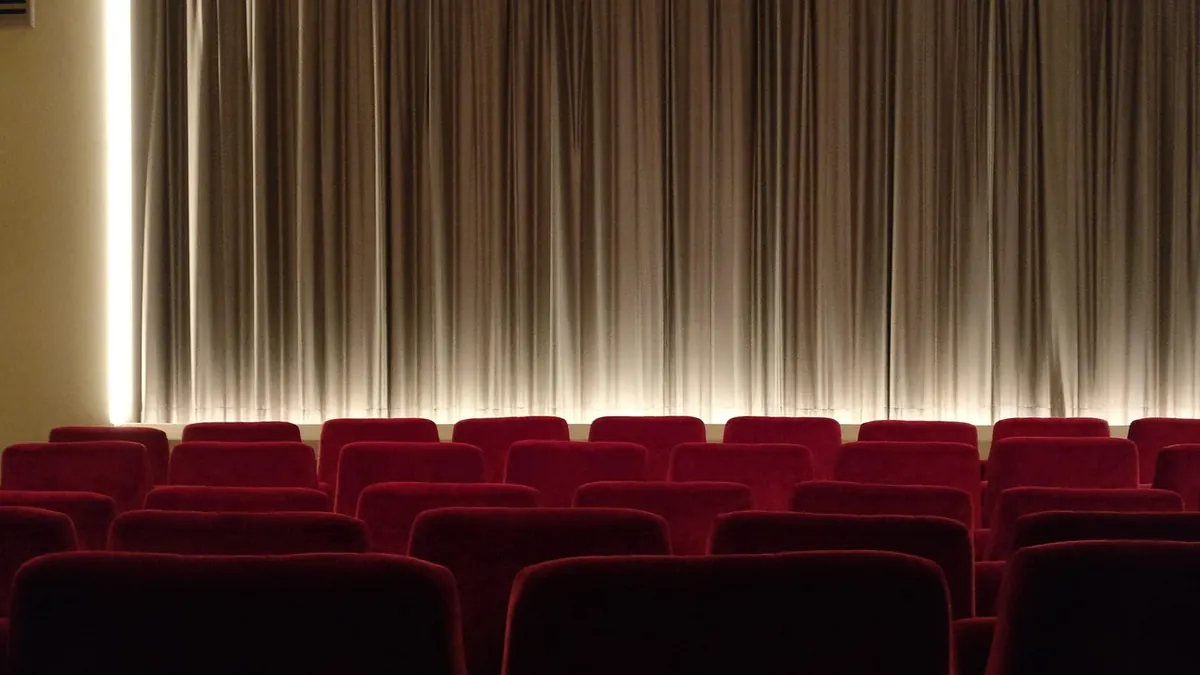
Photo: mermyhh / Pixabay